Prof. Song Xu
Jiangsu University of Science and Technology, China
Song Xu was born in Zhenjiang, China in 1991. He received the B.S. and M.S. degrees (first class with distinction) from the College of Electrical, Energy and Power Engineering, Yangzhou University, Yangzhou, China, in 2014 and 2017, respectively, and his Ph.D. degree in the Division of Electronics and Informatics, College of Science and Technology, Faculty of Gunma University, Kiryu, Gunma, Japan in 2020.
From Mar 2020 to Oct 2020, he was a foreign researcher at Gunma University. In 2020, he joined Jiangsu University of Science and Technology and is currently an Associated Professor at School of Automation. His current research interests include wireless power transfer, digitalized power transfer to renewable energy and energy storage devices, PMSM control strategy verification, power electronic device diagnoses technologies, and intelligent control applications in industrial processes.
Prof. Xu's awards and honors include the three times "Best Presentation Award" of internation conference ICMEMIS in 2017,2018 and 2019, respectively. The second prize of Yangzhou Natural Science Outstanding Paper Award and Second Prize of Science and Technology Progress Award of Jiangsu Cold Chain Society.
Prof. Wei Jiang
Yangzhou Polytechnic Institute, China
Wei Jiang received his BSEE degree from Southwest Jiaotong University, Chengdu, China, in 2003, and his M.Sc. and Ph.D. degrees in electrical engineering from the University of Texas at Arlington, Texas, in 2006 and 2009, respectively.
From 2007 to 2008, he was a senior design engineer with EF Technologies L.L.C., TX, USA. In 2010, he joined Yangzhou University and founded the Smart Energy Laboratory, where he was promoted to full professor. He was appointed as the vice president of Yangzhou Polytechnic Institute in 2023. He has been the visiting professor to Gunma University, Japan, in 2012, University of Strathclyde and Aston University, UK, in 2015.
He was the four-time University Excellent Teaching Award winner. His current research interests include digitalized power conditioning to renewable energy and energy storage devices and microscopic analysis of electromechanical energy conversion. He holds 4 US patents and 19 Chinese patents with 2 licensed by the industry.
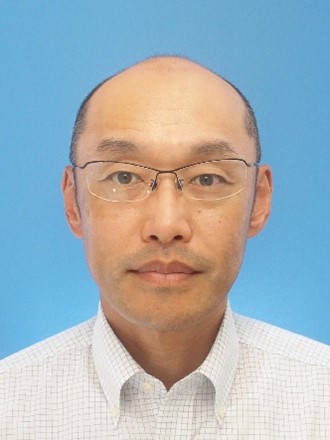
Prof. Seiji Hashimoto
Gunma University, Japan
Seiji Hashimoto received the M.E. and Ph.D. degrees in Electrical and Electronic Engineering from Utsunomiya University, Japan, in 1996 and 1999, respectively. He joined the Department of Mechanical Engineering at the Oyama National College of Technology. Since 2002, he has been a research associate in the Department of Electronic Engineering, Gunma University, where he is now Professor in the Program of Intelligence and Control. He has consulted for companies in control and energy applications and been a visitor professor in China. He has more than 120 refereed articles and more than 20 granted and pending patents. His research interests include system identification, motion control, AI-based control and diagnosis, energy regeneration and its application to industrial fields. He is currently a member of IEEE, IEEJ, SICE, JSAI etc.