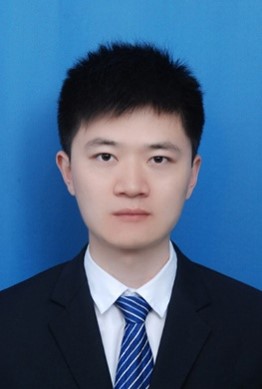
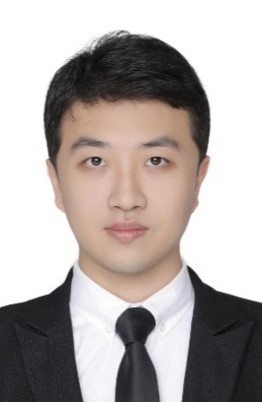
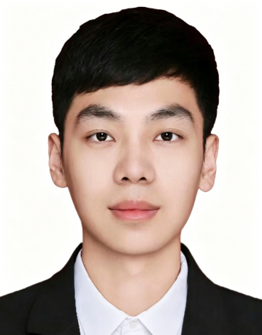
Dr. Xinyu Zhao
Tsinghua University, Shenzhen, China
Xinyu Zhao is currently a Postdoctoral Researcher at Tsinghua Shenzhen International Graduate School, Tsinghua University. He has long been engaged in research on high-performance motor drives, precision motion control, and fractional-order control systems. He has published over 10 high-quality papers as first author in journals including IEEE Transactions and Control Engineering Practice. He serves as a Guest Editor for Electronics, an Editorial Board Member for Fractal and Fractional and other journals, and a Senior Member of the China Electrotechnical Society. He also serves as a Session Co-Chair for the AEES 2026 International Conference.
Assoc. Prof. Ke Shao
Northwestern Polytechnical University, China
Ke Shao is an Associate Professor at the School of Civil Aviation, Northwestern Polytechnical University. He has long been engaged in research on sliding mode control theory and technology, high-precision motor control, and robotic motion control. He has published over 60 high-quality papers in IEEE Transactions, Automatica, and other leading journals, and holds more than 20 authorized patents. He has served as principal investigator for multiple projects funded by the National Natural Science Foundation of China and provincial/ministerial programs. He has been ranked in the Stanford-Elsevier "World's Top 2% Scientists" list for three consecutive years. He serves as an editorial board member for International Transactions on Electrical Energy Systems, Intelligence & Robotics, and Aeroengine. His research achievements have won multiple awards in competitions such as the China Aviation Innovation and Entrepreneurship Competition.
Assist. Prof. Weiyu Wang
Great Bay University, China
Weiyu Wang is an Assistant Professor at the School of Advanced Engineering, Great Bay University, Dongguan, China. He received the Ph.D. in Electrical and Electronic Engineering from The Hong Kong Polytechnic University, where he subsequently served as a Postdoctoral Research Fellow. His research interests encompass electrical machine and drive, vernier reluctance machines, switched reluctance machines, position sensorless drive, linear machines, fault-tolerant control, and intelligent control. He serves as a Guest Editor for IET Power Electronics and is a recipient of the 2023 IEEE Transactions on Energy Conversion Star Reviewer Award.
Dr. Jiangpeng Yang
Tsinghua University, Shenzhen, China
Jiangpeng Yang received the B.S. degree in electrical engineering and automation from Shenyang University of Technology, Shenyang, China, in 2019, and the Ph.D. degree in electrical engineering from Southwest Jiaotong University, Chengdu, China, in 2025. He is currently a Postdoctoral Fellow at Tsinghua Shenzhen International Graduate School, Tsinghua University, Shenzhen, China. His research interests include the control techniques of the dual active bridge converter and multi-level converters, and the topology derivation techniques of AC-DC and DC-AC converters.
Dr. Lei Cheng
Shandong University of Technology, China
Lei Cheng is currently a Lecturer and Master’s Supervisor at the School of Electrical and Electronic Engineering, Shandong University of Technology. He has long been committed to research on drive and control system design for permanent magnet synchronous motors and brushless DC motors, control algorithm development of special motors, and motion control of high-precision CNC machine tools. He has published more than 10 high-level papers indexed by SCI and EI and presided over 2 research projects supported by Ningbo Institute of Materials Technology and Engineering, Chinese Academy of Sciences. He serves as a Guest Editor for a Special Issue of Electronics.